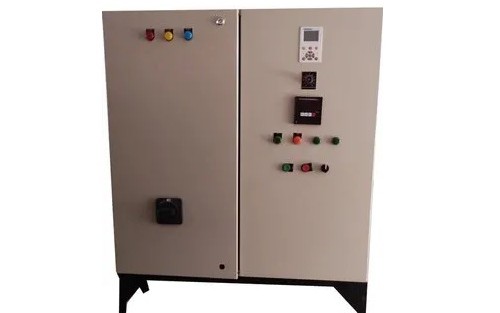
An Automatic Variable Frequency Drive (VFD) Control Panel is an enclosed system designed to automatically regulate the speed, torque, and direction of AC motors, typically utilizing a PLC for closed-loop, energy-efficient operation. It converts fixed-frequency input to variable voltage/frequency, reducing motor stress, saving energy, and enabling automated, real-time control.
Key Components & Functionality
VFD Drive: The core component that adjusts motor speed to match load demands, reducing energy usage by 30% or more, especially in pumps and fans.
Programmable Logic Controller (PLC): Manages automated operations, receiving signals from sensors (pressure, temperature, flow) to adjust VFD speed without manual intervention.
Human Machine Interface (HMI): A touchscreen or panel-mounted display for operators to view system status, monitor energy consumption, and set parameters.
Protection & Switching: Includes circuit breakers, fuses, contactors, and thermal overload relays to protect the VFD and motor from short circuits and overloads.
Cooling System: Fans and filters ensure the VFD operates within safe temperature limits, often housed in IP54 or NEMA-rated enclosures.
Typical Applications
Pumping Systems: Automatic pressure boosting or flow control.
HVAC & Fans: Variable air volume control.
Conveyors & Material Handling: Speed optimization.
Compressors & Industrial Machinery: Precise torque control.
Benefits
Energy Efficiency: Optimizes power usage based on demand.
Motor Protection: Reduces wear and tear via smooth ramping.
Automation: Eliminates manual adjustments with feedback-based control.
Remote Monitoring: Some models feature IoT integration for remote diagnostics and management.